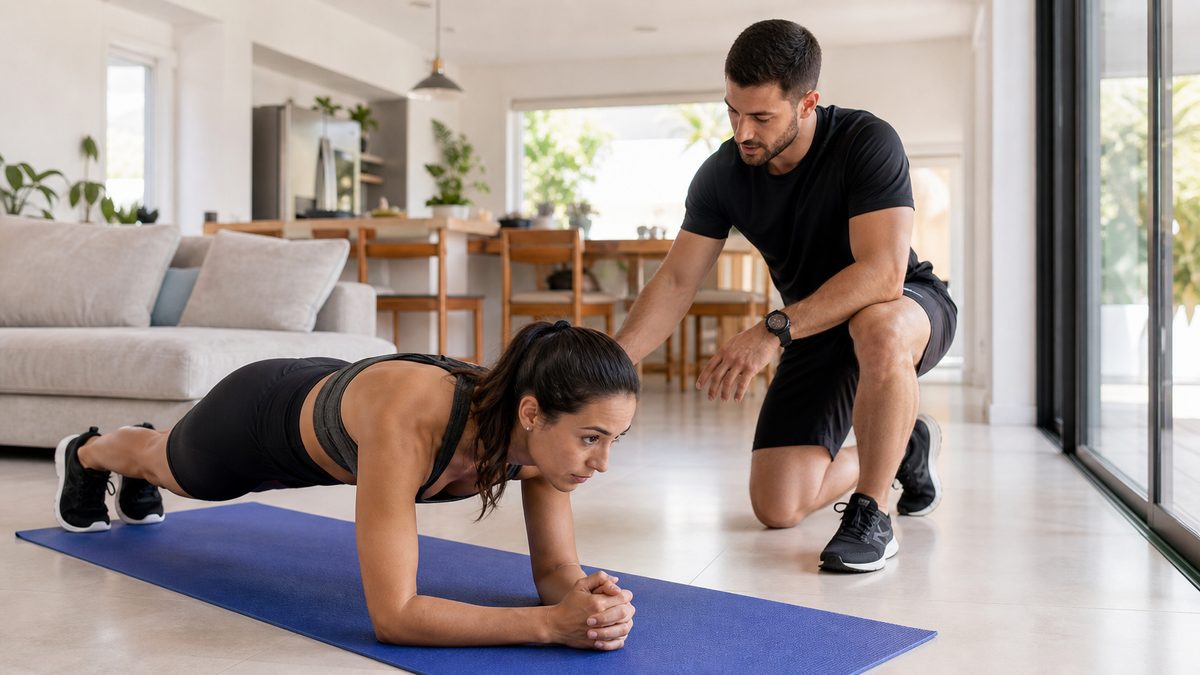
Mobile personal training brings a qualified coach, a planned workout and suitable equipment to your home, so you can train without travelling to a gym. It suits people who value privacy, have a tight schedule or feel more at ease exercising in a familiar place. A good mobile service can deliver effective Strength training, fitness work and movement coaching in a spare room, garage, patio or small courtyard.
The main benefit is less friction. You do not need to pack a bag, drive through Gold Coast traffic or wait for gym equipment. Your Personal trainer arrives at an agreed time and shapes the session around the space you have. That makes regular training easier to maintain, which matters more than having access to a large room full of machines.
What actually happens during an at-home session?
A mobile session should feel organised from the moment the trainer arrives. The trainer checks the exercise area, asks how you feel and confirms whether anything has changed since your last visit. This may include pain, poor sleep, illness or unusual fatigue. The warm-up then prepares the joints and raises body temperature before the main exercises begin. Women across different life stages may have specific coaching needs outlined in Female Personal Training on the Gold Coast: Coaching Options for Every Life Stage.
The central part of the session follows your current plan. It may include squats to a chair, supported split squats, rows, presses, loaded carries or floor exercises. The trainer watches how you move and changes the load, pace or range when needed. Each choice should have a clear purpose linked to your current ability.
A session may finish with lighter movement and a brief review. You should know what you completed, what improved and what to practise before the next visit. Useful coaching gives you direction between sessions instead of leaving each workout as a separate event.
Mobile training is still personal training. It should not become a random circuit made hard for the sake of sweat. The plan needs enough structure to measure progress over several weeks.
How much space do you need to train safely?
Most people need less space than they expect. An area about the size of two exercise mats can support a wide range of workouts. You should be able to lie down, reach your arms overhead and step in each direction without hitting furniture.
The trainer should inspect the surface before starting. Loose rugs, wet tiles, low lights and nearby glass can turn a simple exercise into a needless risk. Pets and young children also need a safe place away from moving weights. In an apartment, the trainer can select quiet exercises that limit jumping and dropped equipment.
Ceiling height matters for overhead work. Floor type affects which movements and loads are sensible. A tiled living room may suit controlled band exercises but not heavy kettlebell work. A garage often gives more room, yet heat and poor airflow can become issues.
Homes across Gold Coast, Queensland vary from compact units to houses with large outdoor areas. mobile personal training service should adapt to your property instead of expecting you to rebuild a home gym. If the planned space is unsuitable, the trainer may use a shaded patio or another safe area on the property.
What equipment can produce a full workout at home?
A large machine is rarely needed. A mobile trainer may bring adjustable dumbbells, a mat, small markers and suspension equipment. A Resistance band can train the back, shoulders, hips and legs while taking little room in the trainer's vehicle.
Your body weight also provides useful resistance. A chair can support squats, incline push-ups and balance drills. A step can be used for controlled step-ups when its height and surface are safe. Towels or cushions may improve comfort, but household objects should never be used as weights unless they are stable and easy to grip.
Equipment choice should follow the exercise rather than drive it. A band is useful only when its anchor point is secure and its condition has been checked. Dumbbells need enough clear floor space around them. Suspension straps require an approved attachment that can hold the expected force.
You may later buy a small set of adjustable weights if you train alone between coached visits. Ask the trainer what load range fits your plan before spending money. Buying several items at once often creates clutter without improving the workout.
Can home workouts build strength without gym machines?
Yes. Muscles respond to tension and increasing demand, not to the building where the exercise happens. Effective Strength training can use dumbbells, bands, body weight or a mix of these tools.
The key is Progressive overload. This means asking the body to do slightly more over time. You might add weight, perform another repetition, use a longer range of motion or reduce the support used during an exercise. The change should be small enough to keep sound form.
Consider a person who begins with a chair squat because standing from a low position feels hard. The trainer may first raise the chair with a firm pad. As control improves, the pad can be removed. A dumbbell can then add load. The movement grows harder in clear steps without needing a squat rack.
Tempo can also increase the demand. Lowering slowly during a split squat makes a light load feel much harder. Pauses can improve control in positions where the person tends to rush. These methods are useful when the equipment has a limited weight range.
The trainer should record exercises, loads and repetitions. Without records, it is easy to repeat the same comfortable workout for months. A plan builds strength when the work progresses and recovery remains adequate.
How does a trainer tailor the plan to your home and body?
The first plan should reflect your movement ability, training history and daily routine. Goal setting turns a broad wish into a target that can guide exercise choices. “Get fit” gives little direction. “Complete ten controlled chair squats without using my hands” gives the trainer something useful to measure.
Your home also shapes the plan. Someone with stairs may use them for carefully supervised step work. A person in an upstairs unit may need low-impact conditioning. Someone who works at a desk in the same room may need equipment that can be packed away within minutes.
Physical fitness includes more than how much weight you can lift. It covers strength, work capacity, mobility and control. The mix should match what you want to do outside training. A parent may want to lift a child without back strain. An older adult may want more confidence getting off the floor. A busy worker may want enough energy to stay active after work.
The trainer should also change the session when your condition changes. Poor sleep may call for a lighter load or fewer sets. Sharp pain calls for stopping the affected movement and assessing the next safe step. Coaching should respond to useful information without turning every minor discomfort into a medical diagnosis.
Can mobile training support weight loss?
Mobile training can support Weight loss by making regular exercise easier and preserving muscle while body weight falls. It cannot replace a sustainable food plan. Exercise helps, but a hard session does not cancel frequent excess eating.
Resistance work is valuable because it gives the body a reason to keep muscle. Walking and other aerobic work can raise weekly activity without causing as much fatigue as repeated intense circuits. A trainer may set a simple walking target alongside home sessions when that suits the person's health and schedule.
The workout also affects the Circulatory system. Working muscles need more oxygen, so heart rate and blood flow rise. The trainer should build this demand at a level you can manage. A beginner might alternate a set of supported squats with an easy march. A fitter person may use loaded carries or faster step-ups.
Progress should be judged through more than the scale. Waist measurements, exercise performance and everyday energy can reveal changes that body weight hides. Daily weight can move because of fluid, food and digestion. A consistent review schedule gives a clearer view.
How should outdoor conditions change a home session?
Training at home on the Gold Coast may still mean training outside. Heat, direct sun and wet surfaces can change what is safe. The trainer should move the session indoors, lower the intensity or change the exercise selection when conditions make the original plan unsuitable.
Morning sessions can reduce heat exposure, but humidity may still make effort feel harder. Water should be close by. Clothing should allow heat to escape. Anyone who feels dizzy, confused, faint or unusually unwell should stop rather than trying to finish the set.
Rain creates another problem. Tiles, decking and artificial grass may become slippery before the area looks unsafe. Lightning rules out exposed outdoor training. A prepared trainer carries an indoor version of the session so the appointment still has value.
Noise also matters. Repeated jumps may disturb neighbours or wake family members. Quiet strength work can be demanding without heavy impact. Slow lunges, controlled presses and band rows can keep the session effective in a shared building.
What safety checks should happen before you begin?
A trainer should ask about your health history, current symptoms, medication and past injuries before hard exercise begins. The trainer may request medical clearance when your answers point to a risk that needs clinical advice. A trainer can coach exercise, but should not diagnose an injury or tell you to stop prescribed treatment.
Check the trainer's current qualification, first aid status and Insurance. Insurance does not prove coaching skill, yet it is a basic sign that the service operates as a professional business. Ask whether the cover applies to sessions delivered at a client's home.
The trainer should explain how personal details are stored and what happens in an emergency. They should know the property address during the booking and keep a phone accessible. If equipment is used, it should be inspected for wear before the session.
Clear boundaries protect both people. You should understand cancellation terms, arrival procedures and whether another adult must be present when a minor trains. These details prevent confusion once regular visits begin.
How can you prepare for the trainer's first visit?
Choose the clearest available area and remove items that could cause a trip. Tell the trainer about stairs, gates, parking limits and pets before the appointment. This avoids lost session time and helps the trainer bring suitable equipment.
Wear clothes that let you bend and reach. Supportive shoes may be needed for outdoor or loaded work, though some controlled exercises can be performed barefoot when the surface and trainer's plan allow it. Keep water nearby and avoid a large meal just before training.
Write down any pain, medical advice or exercise concerns you want to discuss. Be direct about your current activity level. Claiming that you train more often than you do can lead to a session that is too hard. Accurate information produces a safer starting point.
During the visit, notice whether the trainer listens, explains each exercise and adapts to the room. You should feel coached rather than rushed. Mild effort and muscle fatigue are expected, but sharp pain is a signal to stop and report what you feel.
How do you keep making progress between visits?
Use a simple written plan. It should state the exercise, sets, repetitions and equipment. Video guidance may help with movements the trainer has already taught, but it should not replace clear coaching on new or complex tasks.
Schedule solo sessions like appointments. A short planned workout is more useful than waiting for a free hour that never appears. Keep the equipment in one easy-to-reach place so setup does not become a reason to skip training.
Record what you complete and note any pain or unusual fatigue. Share that record at the next coached session. The trainer can then adjust the plan based on evidence instead of guessing.
Do not add hard workouts simply because the first week feels easy. Early enthusiasm often exceeds the body's ability to recover. Follow the planned increase, keep technique steady and allow rest between demanding sessions.
What is the best first step?
Book an initial home assessment and ask the trainer to leave you with one clear four-week plan that fits your space, equipment and weekly schedule.