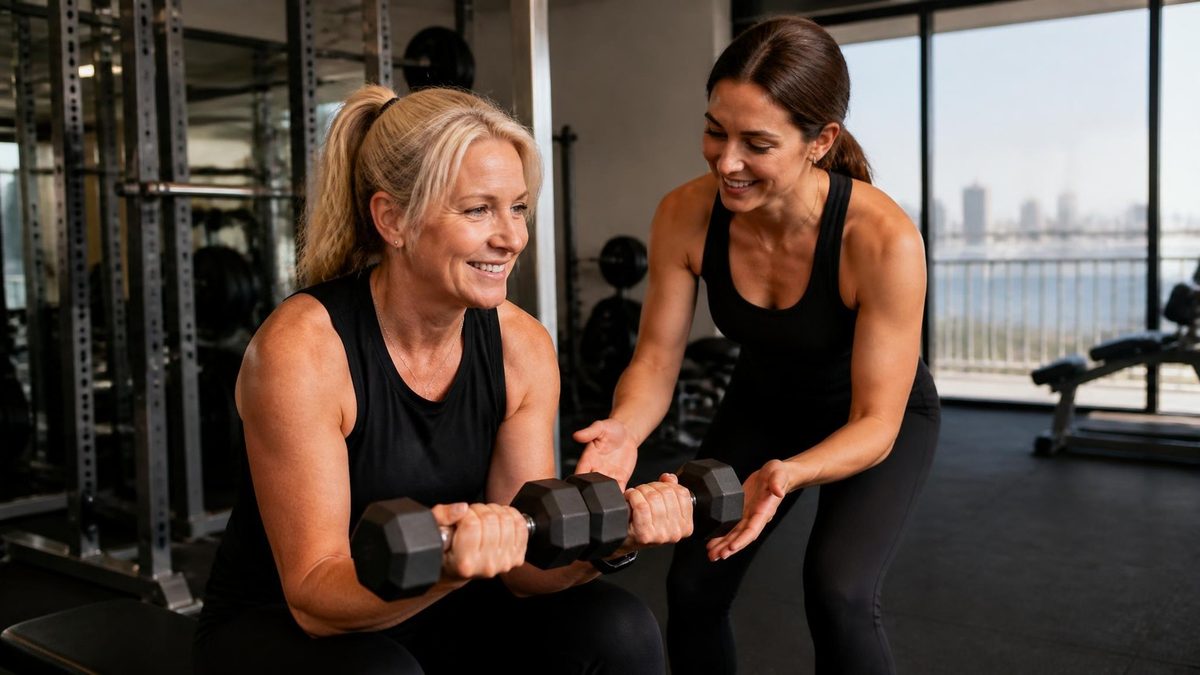
The right female personal training plan changes as your body, health and daily life change. A woman in her twenties may want to build strength and confidence. During pregnancy, the goal may shift to comfort and safe movement. The postpartum period calls for careful rebuilding. Later, menopause and ageing can make muscle, bone and heart health the main focus.
A skilled Personal trainer adapts the plan instead of forcing every woman into the same workout. This matters because training needs can change with hormones, injuries, sleep, work, family care and medical conditions. The best coaching option is the one that fits your current stage and gives you a clear path forward. female personal trainer on the Gold Coast
What should training focus on in early adulthood?
Early adulthood is a strong time to learn movement skills that can serve you for decades. The main aim should be useful strength, sound technique and a routine you can keep. Weight loss may be part of the goal, but it should not control every choice. pregnancy and the postpartum period
Strength training builds Skeletal muscle and supports joints. It can also improve Body composition by helping you gain or keep lean tissue. This gives women a better base for sport, work, travel and everyday tasks.
A good plan may include squats, hinges, pushes, pulls, carries and core work. The exact exercise matters less than the fit. A beginner may start with a box squat and a light dumbbell. An experienced client may use a barbell. Both can make progress when the load matches their current skill.
Progressive overload drives that progress. It means asking the body to do slightly more over time. You might add a small amount of weight, complete an extra repetition or improve your control. It does not mean training to exhaustion at every session.
I remember one client who judged every workout by how sore she felt the next day. Her lifts stalled because she kept changing exercises and pushing too hard. When we used repeatable sessions and tracked small gains, she became stronger without feeling wrecked after each workout. The lesson was simple: progress needs a clear signal, followed by enough recovery.
How can coaching change before and during pregnancy?
Before pregnancy, training can build the strength and work capacity needed for the physical demands ahead. Strong legs, hips, back and upper body can help with lifting, carrying and repeated changes of position. Aerobic exercise can support the Circulatory system and improve general stamina.
During pregnancy, exercise must respond to symptoms, medical advice and the stage of pregnancy. The goal is rarely to chase personal records. It is to keep moving well while managing fatigue, joint changes, heat and comfort.
A trainer may adjust exercise choice, load, range of motion and body position. For example, a deep squat may become uncomfortable as the abdomen grows. A raised squat target can let the client keep training the same movement pattern with more control. Running may shift to walking, cycling or another low-impact option when impact stops feeling right.
Pregnancy is also a time when professional limits matter. A trainer provides exercise coaching. A midwife, doctor or other Health professional manages clinical care. Pain, bleeding, dizziness, unusual shortness of breath or medical restrictions require clinical advice rather than a harder workout.
What does safe coaching look like after birth?
The Postpartum period is a rebuilding stage, not a race back to an old routine. Birth type, tissue healing, feeding, sleep and pelvic floor symptoms all affect the starting point. Two women who gave birth in the same month may need very different plans.
Early coaching often starts with breathing, gentle core control, walking and simple resistance work. From there, the plan can build toward stronger squats, hinges, carries and upper-body movements. Impact work should return in steps rather than through one hard test.
One of my clients wanted to restart group circuits because she had trained through most of her pregnancy. She still felt heaviness when walking downhill and leaking when she coughed. Adding jumps would have ignored useful warning signs. She saw a pelvic health clinician, then returned with guidance we could use in her sessions. Her first goal became symptom-free walking and strength work. Running came later.
Physical therapy may be needed when pain, pelvic floor symptoms, abdominal concerns or movement limits require assessment and treatment. Exercise physiology may suit women who need exercise support for a diagnosed health issue or more complex recovery. A trainer can then work within the advice provided by those clinicians.
This team approach protects progress. It also stops common symptoms from being dismissed as something every new mother must accept.
How should training respond to perimenopause and menopause?
Perimenopause and menopause can affect sleep, energy, temperature control, recovery and confidence. Training still works, but the plan may need tighter control over volume and recovery.
Resistance work becomes especially useful because age and hormonal change can affect Skeletal muscle and Bone density. Heavy does not mean reckless. It means using enough resistance to make the final repetitions demanding while keeping good form.
Progressive overload remains the key. A woman may begin with supported split squats, cable rows and dumbbell presses. Over time, she can add load or use harder versions. Small, tracked gains work better than random high-intensity sessions.
Aerobic exercise also has a clear role. Brisk walking, swimming, cycling or interval work can improve Physical fitness and support the Circulatory system. The best mix usually combines resistance sessions with aerobic work that the client can recover from.
When we adjusted one client’s plan during perimenopause, we did not remove hard training. We moved her hardest session away from a poor-sleep day and cut exercises that added fatigue without helping her goal. Her strength began rising again because the plan matched her recovery.
Body weight alone can hide these gains. Waist measurements, lifting records, walking pace, energy and Body composition can give a fuller view of change.
Can women begin strength work later in life?
Women can begin Strength training at almost any age. The starting level may change, but the body can still respond to a well-sized training signal.
Later-life coaching should support the tasks that protect independence. These include getting up from a chair, climbing steps, carrying shopping and recovering from a small loss of balance. Exercises should connect to those tasks while still building broad capacity.
A session may use a chair squat, step-up, supported row and loaded carry. As ability grows, the trainer can lower the chair, raise the step or increase the load. This is Progressive overload in a practical form.
Bone density needs special attention after menopause. Resistance work and suitable weight-bearing exercise place useful stress on bone. A casual walk still supports health, but it may not provide enough loading by itself to build strength or protect bone as well as a planned resistance program.
Fear often limits women before their bodies do. Clear instruction, stable starting positions and gradual changes can restore trust. In my experience, recording a client’s first unsupported floor rise or first confident set of loaded squats can matter more than a scale reading. It shows a skill she can use outside the session.
How does coaching work with pain or a chronic condition?
A Chronic condition does not always rule out personal training. It changes how the trainer plans, checks symptoms and works with clinical advice.
Conditions such as arthritis, diabetes, osteoporosis or heart disease may affect exercise choice and session pace. The coach should know what has been diagnosed, what treatment is under way and which warning signs require the session to stop.
Training should stay inside the trainer’s scope. Physical therapy focuses on assessment and treatment of injury or movement problems. Exercise physiology uses clinical exercise for health conditions and complex needs. A Personal trainer supports general exercise, skill, routine and progress. These roles can work together when communication is clear.
For a client with knee arthritis, removing every knee-loading exercise may reduce capacity further. A better response may be a shallower squat, slower pace and a load she can control. Pain response during the session and over the next day can guide the next step. Sharp pain, swelling or a sudden loss of function calls for review by a Health professional.
The aim is not to prove toughness. It is to build more ability without ignoring risk.
Which coaching format fits each life stage?
The right format depends on the support a woman needs at that point in life. One-to-one sessions give the trainer the most control over technique, pace and exercise changes. This can suit beginners, pregnant clients, women returning after birth and people managing symptoms.
Small-group coaching can reduce cost and add social support. It works best when the group has enough structure for individual loads and exercise changes. A group labelled for women is not automatically suitable for pregnancy, postpartum recovery or a Chronic condition.
Online coaching can work for women who already know basic movements and need programming, tracking and regular feedback. Hybrid coaching combines occasional in-person sessions with an online plan. This can suit busy parents or shift workers who need flexibility but still want technique checks.
Some women prefer a female coach because they feel more at ease discussing periods, pregnancy, pelvic floor symptoms or menopause. Others care more about skill and communication than the trainer’s gender. Either choice can work. The coach must listen, respect privacy and adapt the plan without making assumptions about a woman’s goals.
What local factors affect training on the Gold Coast?
Training in Gold Coast, Queensland often means managing heat, humidity, sun and sudden rain. These conditions can change effort even when the workout stays the same.
Outdoor sessions may need an earlier start, more shade, longer rests and a lower pace. Heat can be harder to manage during pregnancy, menopause or when medication affects temperature control. Indoor coaching may offer a more stable setting during hot months.
The Gold Coast lifestyle also gives women many ways to support gym work. Walking, swimming and cycling can add enjoyable Aerobic exercise. These activities still need to fit the total training load. A long weekend ride can affect recovery from a hard lower-body session.
Travel time matters too. A strong program fails when the schedule makes attendance unrealistic. A nearby studio, home-based session or hybrid plan may produce better results than a perfect facility that is hard to reach.
How can you tell whether the plan is working?
A useful plan measures results linked to the woman’s current life stage. A new lifter may track technique and load. A postpartum client may track symptoms and walking tolerance. A woman in later life may track chair rises, carrying strength and confidence on stairs.
Physical fitness should improve without a steady rise in pain, fatigue or dread. Some muscle soreness is normal after a new exercise. Lasting joint pain, poor sleep and falling performance often show that the plan asks for more than the client can recover from.
Reviews should lead to changes. If strength rises, the coach can increase the challenge. If symptoms appear, the coach can reduce load, change the movement or seek clinical input. Data has little value when nobody uses it.
A good coach also checks whether the plan still serves the client’s life. Goals can change after pregnancy, illness, a new job or the start of menopause. The program should change with them.
What should you do before starting?
Write down your current life stage, main goal, exercise history and any symptoms that affect movement. Include pregnancy status, recent birth, injuries, medication and any Chronic condition. Share relevant clinical advice before the first hard session.
- Choose a coaching format that you can attend most weeks.
- Ask how the trainer adapts Strength training for your current stage.
- Confirm when the trainer refers clients to Physical therapy or Exercise physiology.
- Set one result you can measure over the next eight to twelve weeks.
Book an initial assessment with a qualified female-focused coach and use it to build a plan for the body and life you have now.