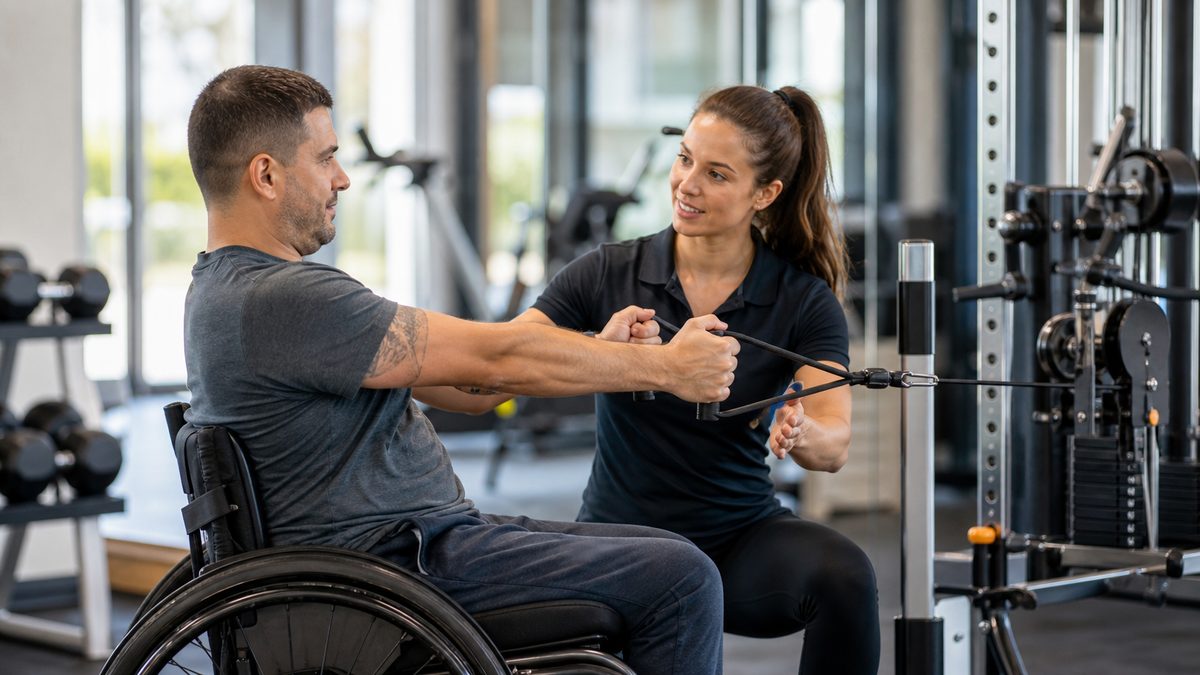
NDIS funding may support personal training when the service is linked to your disability, plan goals and functional capacity, but it does not usually pay for ordinary fitness costs. The key question is why you need the support. Wanting to get fit is not enough on its own. You need to show how the service may help you do daily tasks, join community life or become more independent.
The National Disability Insurance Scheme applies funding rules to each person and support. A service that suits one participant may not suit another. Your plan type, stated goals, available funding and supporting evidence all affect the answer. Before booking sessions, ask the NDIA, your plan manager or support coordinator to confirm how the proposed service fits your current plan.
What makes personal training relevant to an NDIS plan?
The strongest link is between the training and a functional problem caused by Disability. This could include poor balance, low physical tolerance, trouble getting up from a chair or difficulty taking part in community activities. The trainer should then deliver Exercise that works on that specific need.
For example, a participant may want enough leg strength to move around a shopping centre without needing as many rest stops. Another may want to feel steady when stepping onto public transport. In each case, the purpose goes beyond general Health or appearance. The sessions support a task that affects everyday life.
I remember one client whose first goal was written as “get stronger.” That gave us little direction. We changed the working goal to standing from a dining chair without using both hands. The sessions could then focus on leg strength, control and safe practice. Progress was also easier to record.
A useful service description should explain four points:
- The daily activity that is hard now.
- How the disability contributes to that difficulty.
- What the training will work on during sessions.
- How progress will be measured and reported.
This link helps the participant, provider and funding decision-maker understand the same purpose.
Which support option fits the participant’s needs?
Personal training is one option within a wider support team. It suits people who can take part safely with a fitness professional and need coaching, routine or adapted physical activity. It is not a replacement for clinical care.
An exercise physiologist may be a better fit when the person needs clinical assessment or treatment for a complex condition. A physiotherapist may be needed for pain, injury, movement loss or rehabilitation. An occupational therapist may focus on how physical ability affects tasks at home or in the community. The exact professional should match the problem being addressed.
A personal trainer may then help turn clinical guidance into a regular routine. For example, an allied health professional might set safe movement limits. The trainer can use those limits while coaching suitable sessions and recording how the participant responds.
On the Gold Coast, the setting can also affect access. Some participants work best in a quiet studio. Others prefer a local park, their home or a calm gym outside busy hours. Sensory load, transport, mobility access and heat should shape the choice. The cheapest venue is poor value if the participant cannot use it with Confidence.
How should a goal be written so it guides the service?
A useful goal describes a real change in the participant’s life. It should connect physical ability with independence, access or participation. “Improve fitness” is too broad because it gives no clear test of success.
Better goals describe what the participant wants to do. A person may want to walk from a car park to a community class. They may want to complete part of their morning routine with less physical help. A young adult may want to join a social sports activity and stay involved for the full session.
Turn that life goal into simple measures. These may include the time spent walking before a rest, the number of controlled chair stands or the level of prompting needed to follow a session. Measures should matter to the participant. A heavier lift has little value if it does not improve the task they care about.
When I tried this goal-first method with a participant who often stopped after ten minutes, the useful measure was not body weight. We tracked how long they stayed engaged and how many prompts they needed. Over time, they completed more of the session with fewer prompts. That was a clearer sign of Capacity building than a change on the scales.
Goals should remain flexible at session level. Sleep, medication changes, pain and sensory stress can affect performance. The life goal can stay steady while the trainer adjusts the activity on a hard day.
What can NDIS funding cover?
Funding depends on the participant’s plan and whether the support meets current NDIS funding rules. The fact that a service may help does not mean it can be charged to the plan. It must relate to the participant’s disability support needs and sit within available funding.
The NDIA will generally distinguish a disability-related support from a cost that any member of the public might pay. A standard gym membership, sports fee or general weight-loss program is usually an ordinary living cost. Personal training may have a stronger case when it provides individual disability-related support that cannot be met through a standard service.
Capacity building funding may be relevant when the service is designed to build skills, independence or community participation. Yet the name of a Budget category does not create automatic approval. The participant must check that the service, provider and claim method fit the plan.
Plan management also changes the process. Agency-managed participants usually need registered providers for funded supports. Plan-managed and self-managed participants may have more provider choice, but the support must still comply with NDIS rules. A service agreement does not turn an excluded cost into an approved one.
Before spending funds, ask for a written answer to these questions:
- Which plan goal does the service support?
- Which budget or support category may be used?
- Does the provider need a certain registration or qualification?
- What records are required for invoices and reviews?
Keep the reply with the service agreement. Verbal advice can be hard to rely on if an invoice is questioned later.
What evidence can support a funding request?
Good evidence explains function, need and expected benefit. It should not rely on a diagnosis alone. Two people with the same diagnosis can have very different support needs.
An allied health report can describe the current barrier and why a certain type of support is suitable. It may also explain why a common community option does not meet the person’s needs. A provider proposal can add session frequency, intended activities, safety controls and a review date.
Reports should use plain examples. “Reduced lower-limb capacity” says less than “the participant needs both arms and another person’s prompt to stand from a low chair.” The second version shows how the issue affects daily life.
Evidence becomes stronger when it sets a clear trial period. A twelve-week block might track attendance, walking tolerance and the help needed during set tasks. The provider can then report whether the support is working. This protects the participant’s Budget from sessions that continue without a useful result.
What I found was that short session notes often reveal more than a broad end-of-plan statement. Notes can show missed sessions, signs of overload and changes in support needs. They also help the wider team adjust the plan before a small issue becomes a safety risk.
How can training be made safe and accessible?
Start with the participant’s support needs, not a standard workout. The trainer should ask about communication, mobility, seizures, fatigue, sensory needs and known medical limits. Relevant information should be shared with consent and kept private.
The trainer must also work within professional scope. They should pause and refer when symptoms need clinical assessment. Sudden chest pain, fainting or a major change in movement ability requires an appropriate health response, not a modified workout.
Accessible coaching may use visual instructions, demonstrations or extra processing time. Some people benefit from doing the same opening activity at each session. Others need fewer people nearby or a clear plan for breaks. These changes can increase Confidence because the participant knows what will happen and how to ask for help.
Support workers and family members can help when the participant agrees. Their role should be clear. They may assist with transport, communication or behaviour support, while the trainer remains responsible for the fitness session. Boundaries reduce confusion and make incidents easier to manage.
How should progress be reviewed?
Review progress against the participant’s daily-life goal. Do not judge success only by gym measures. A participant may lift the same weight yet need fewer prompts, recover faster or feel ready to attend a community activity. Those changes may matter more.
A simple review can compare the starting point with current ability. Record what the participant can do, how much help they need and whether the change carries into daily life. Ask the participant what feels easier. Ask whether the support still fits their preferences.
Progress can also mean reducing paid support. If the participant learns to complete a safe routine with less coaching, the service may move from weekly sessions to less frequent check-ins. That can be a strong Capacity building result because the person has gained skill and control.
If no useful change appears, adjust the method or seek input from the relevant clinician. More sessions are not always the answer. The activity may be too hard, the setting may cause stress or the chosen provider may lack the right experience.
How do you choose a suitable Gold Coast provider?
Choose a provider who can explain how their work connects to the participant’s goals. They should be clear about qualifications, insurance, pricing and service limits. They should also be willing to work with allied health professionals when needed. Gold Coast personal training providers should demonstrate experience with disability support needs.
Ask how the trainer changes communication for the participant. Ask what happens if symptoms change during a session. Check whether the venue has suitable entry, toilets and parking. For outdoor sessions, discuss heat, storms and an indoor backup before the first booking.
Request a written service agreement that covers session fees, travel, cancellations, reports and exit terms. Compare each cost with the participant’s available Budget. A low hourly rate may still cost more if travel and report fees are unclear.
One of my clients tried a busy gym because it was close to home. The noise made it hard for them to follow instructions, so several sessions ended early. A quieter setting cost slightly more per visit but produced longer, calmer sessions. The right environment gave better value because the service became usable.
What should you do before the first paid session?
Use a short approval and setup process:
- Write down the daily task or community activity the participant wants to improve.
- Ask the relevant allied health professional whether personal training is safe and suitable.
- Get written confirmation about the NDIS funding category and claim method.
- Agree on one starting measure and a date for review.
Then arrange an introductory meeting before committing to a long package. The participant should have a real say in the trainer, location and session style. Funding rules matter, but choice still shapes whether the support works.
Take one action today: send the proposed goal, provider quote and service description to your plan manager, support coordinator or the NDIA and request written funding confirmation before booking.