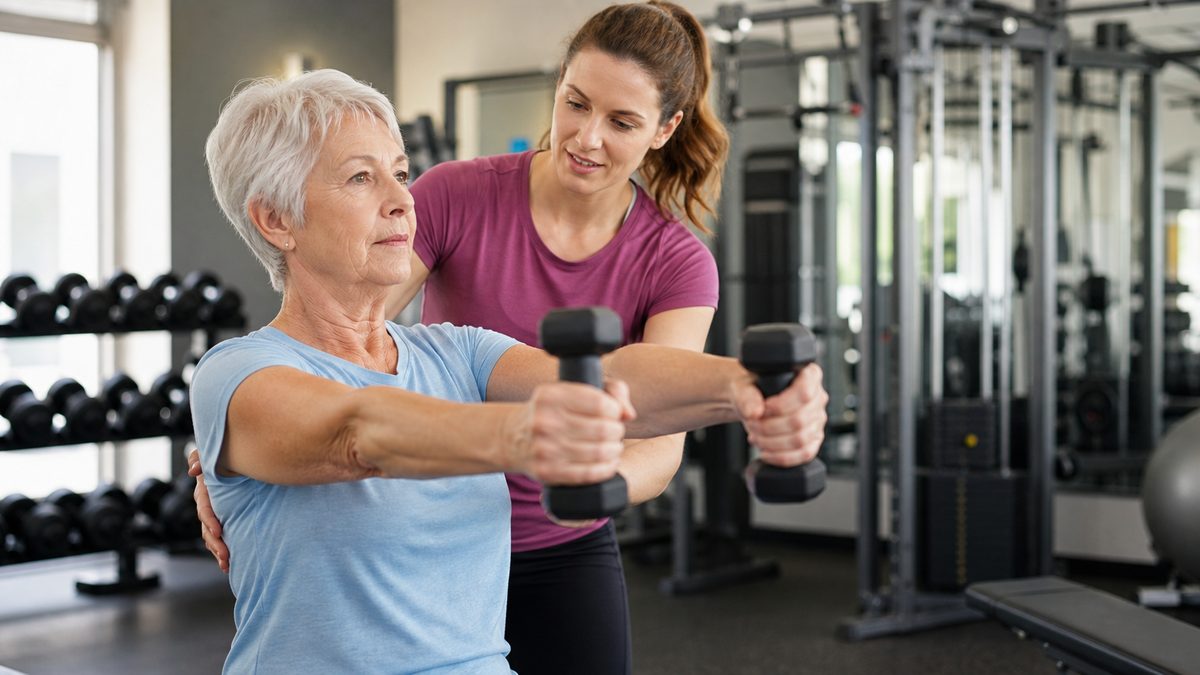
Personal training can help older adults stay strong, steady and able to manage daily life with less help. The best program trains the movements used outside the gym. That means standing from a chair, carrying bags, climbing steps, reaching safely and recovering from a small loss of balance.
Age does not remove the ability to gain strength. The body still responds to Exercise when the load suits the person and rises at a safe rate. A good trainer finds the right starting point, teaches sound movement and measures progress by what becomes easier in daily life.
The main goal is everyday independence. Muscle size, gym numbers and body weight can offer useful data, but they are not the final test. The real test is whether the person can move through the day with more control, less effort and greater confidence.
What should training help an older adult keep doing?
Training should protect the Activities of daily living that allow a person to live on their own terms. These include getting out of bed, using the toilet, preparing food, bathing, dressing and moving around the home. It should also support harder tasks such as shopping, cleaning, gardening and using public transport.
These jobs rely on several physical skills working together. Leg strength helps a person rise from a low chair. Grip and upper-body strength help with jars, doors and shopping bags. Balance helps during turns and when stepping over a curb. Fitness limits how tired the person feels while walking through a shop.
Picture a client who can complete ten leg presses but still uses both hands to leave a dining chair. The machine has built some force, yet the program has missed the movement that matters. A trainer can close that gap with repeated chair stands, careful changes in seat height and practice controlling the lowering phase.
This focus also makes progress easier to notice. A client may first need a hand on a bench when stepping up. Several weeks later, the same person may climb the front steps while carrying a light bag. That change has more value than a number written beside a gym machine.
Why does strength become the base of independence?
Skeletal muscle produces the force needed to move, brace joints and catch the body after a trip. Adults tend to lose muscle and power as they age, especially when illness, pain or fear leads to less movement. Long periods of sitting speed up that loss.
Strength training gives the body a reason to keep useful muscle. The program can include chair stands, supported squats, step-ups, rows, wall presses and loaded carries. The correct choice depends on current ability, pain, medical history and the movements the client wants to improve.
Power also matters. Power means producing force quickly. A person uses it when rising from a chair without rocking several times or when taking a fast recovery step. Heavy lifting is not the only way to train it. A trainer might ask a client to stand from a safe chair with controlled speed, then sit down slowly.
The load must be hard enough to create change. If every set feels effortless, the body has little reason to adapt. If the load breaks form or causes sharp pain, it is too high. A useful set often ends when the client could complete only a few more sound repetitions.
Progress can come from a small rise in resistance, an extra repetition or a harder version of the same movement. It can also come from using less hand support. These changes should be planned and recorded. Random sessions make it hard to know what caused an improvement or a flare-up.
How does balance improve in a useful way?
Balance improves when a person practises staying in control during tasks that test balance. General movement helps, but it does not replace direct balance work. The training should include safe changes in foot position, direction, speed and visual attention.
A trainer may begin with feet apart near a stable rail. The client can then move toward a narrower stance, slow marching or controlled steps in different directions. Later work might include turning, stepping around an object or carrying something light while walking.
Real life rarely asks a person to stand still on a flat gym floor. People lose balance while looking for a street sign, moving around furniture or stepping onto wet ground. Good training prepares for those moments without creating needless risk.
A common mistake is making an exercise look difficult before the client has mastered the base task. Standing on an unstable cushion may seem advanced, yet it can reduce the quality of the movement. Firm ground, sound foot control and a clear escape route often produce better practice.
Confidence should grow beside skill. Some older adults move less after a near fall even when they were not hurt. Less movement then reduces strength and makes another loss of balance more likely. Supported practice can break this cycle by giving the person proof that they can move safely.
What does effective Fall prevention include?
Fall prevention needs more than static balance drills. It should build leg strength, quick stepping, safe walking and the ability to get up from the floor when appropriate. It should also account for hazards outside the training session.
A trainer can observe how the client starts walking, turns and stops. Shuffling, rushed turns or reaching for nearby objects may reveal a problem. The trainer can then choose drills that address the pattern while recommending medical review when the change is sudden or unexplained.
Practice should include getting down to and up from the floor if the person can do so safely. This skill can reduce panic after a non-injury fall. It also reveals whether the client can move through kneeling positions and push through the arms and legs.
Exercise cannot correct every fall risk. Poor vision, some medicines, dizziness, unsafe footwear and loose rugs can raise risk. A trainer should stay within their role and refer the client to a doctor, physiotherapist, optometrist or pharmacist when needed.
Bone density deserves attention because stronger bones may reduce the harm caused by a fall. Resistance training and suitable weight-bearing work can support bone health. The program must match the person. Someone with osteoporosis, past fractures or marked spinal changes may need medical guidance and modified lifting positions.
How much fitness work supports daily energy?
Strength and balance work should sit beside Aerobic conditioning. This improves the ability to walk farther, complete errands and recover after effort. It trains the heart, lungs and Circulatory system to supply working muscles.
Aerobic exercise can include walking, cycling, pool work or a seated cardio machine. The best option is one the client can repeat without joint pain or excessive fatigue. Short blocks often work well at first. Five minutes of steady movement can grow into longer periods as tolerance improves.
The pace should allow safe breathing and control. A simple talk test helps. During moderate work, the client should be able to speak in short sentences. A trainer can also use heart-rate data when medicines and medical conditions do not make it misleading.
This work matters for people managing risk factors linked with Cardiovascular disease. Yet a trainer should never treat exercise as a replacement for medical care. Chest pressure, fainting, unusual shortness of breath or a new irregular heartbeat calls for prompt medical review.
More cardio is not always better. Long sessions that leave an older client drained can reduce the quality of strength work and make daily tasks harder later that day. The dose should build capacity without taking away the energy needed for normal life.
How should a trainer adapt sessions around pain or health conditions?
A trainer should adapt the task, range, load and pace while keeping the goal clear. Knee pain may lead to a higher chair for sit-to-stands. A sore shoulder may call for a different pressing angle. Reduced grip may require lighter handles or straps when suitable.
Pain during training should not be ignored. Sharp, spreading or rapidly increasing pain is a reason to stop the movement. Mild effort in working muscles is expected. Joint pain that remains worse after the session shows that the dose or exercise choice needs review.
Health history shapes the plan. Diabetes may affect meal timing and blood glucose. Blood pressure medicine may change the heart-rate response. Arthritis may need a longer warm-up. A recent operation may require written clearance and limits from the treating clinician.
The trainer should ask about changes before each session. Poor sleep, illness and a medication change can alter what is safe that day. Adapting one session is good coaching, not lost progress.
Personal training also gives the coach a close view of movement quality. If one leg suddenly becomes weak or speech changes, the session should stop and emergency help may be needed. If decline is gradual, the trainer should document it and encourage clinical assessment.
What should happen in a well-planned session?
The session should begin with a brief check of current health, pain and recent falls or near falls. The warm-up can then rehearse the movements used later. Slow walking, ankle movement and easy chair stands often prepare the body better than unrelated stretches.
The main strength work should cover useful movement patterns. A session may include a squat to a box, a pulling movement, a supported step and a carry. Balance drills can appear between strength sets when fatigue remains low enough for safe control.
Aerobic work can follow as a short steady block or appear in intervals across the session. Rest periods should allow breathing and technique to settle. Older adults do not need to be rushed from one task to another for a workout to count.
The trainer should record resistance, repetitions, support used and any symptoms. Measures can also include chair-stand ability, walking distance and the time needed to complete a safe movement task. Regular checks show whether the plan is improving Physical fitness in ways the client can feel.
The session should end before form falls apart. Leaving some energy in reserve helps the client return to normal duties and recover for the next session. Severe soreness is not proof of a useful workout.
How often should an older adult train?
Two strength sessions each week suit many older adults. Some benefit from a third shorter session. Balance practice can happen more often because brief, well-supported drills create little fatigue. Aerobic work can be spread across the week in manageable blocks.
Recovery time matters, but long gaps slow learning. A client who trains once and then does nothing for seven days may spend each session relearning the same skills. A simple home plan can keep the pattern familiar between coached visits.
Home work should be short enough to follow. One chair exercise and one supported balance drill may achieve more than a long sheet that stays in a drawer. The client should know where to hold, when to stop and how many repetitions to complete.
Consistency beats occasional hard effort. Progress often appears first as smoother movement or less need for support. These small gains build the base for heavier resistance and harder walking tasks.
How can you judge whether a trainer is the right fit?
A suitable trainer asks about medical history, falls, pain, current activity and the daily tasks the client wants to protect. They explain why each exercise is in the program. They also know when a concern sits outside their scope. qualified trainer
Watch how the trainer changes an exercise. A skilled coach can make the task easier without making the client feel incapable. They can also increase the challenge without turning the session into a test of courage.
The trainer should use clear cues and allow time to learn. They should place supports before they are needed and keep the training area free from trip hazards. Respect matters as much as technical skill. Older adults should be coached as capable people with specific goals.
Ask how progress will be measured. A sound answer may include strength records, balance tasks and changes in daily function. If the only measures are body weight or exhaustion, the service is missing the main reason many older adults train.
What should you do before starting?
Choose one daily task you want to make safer or easier, then book an assessment with a qualified trainer and use that task as the first measure of progress.