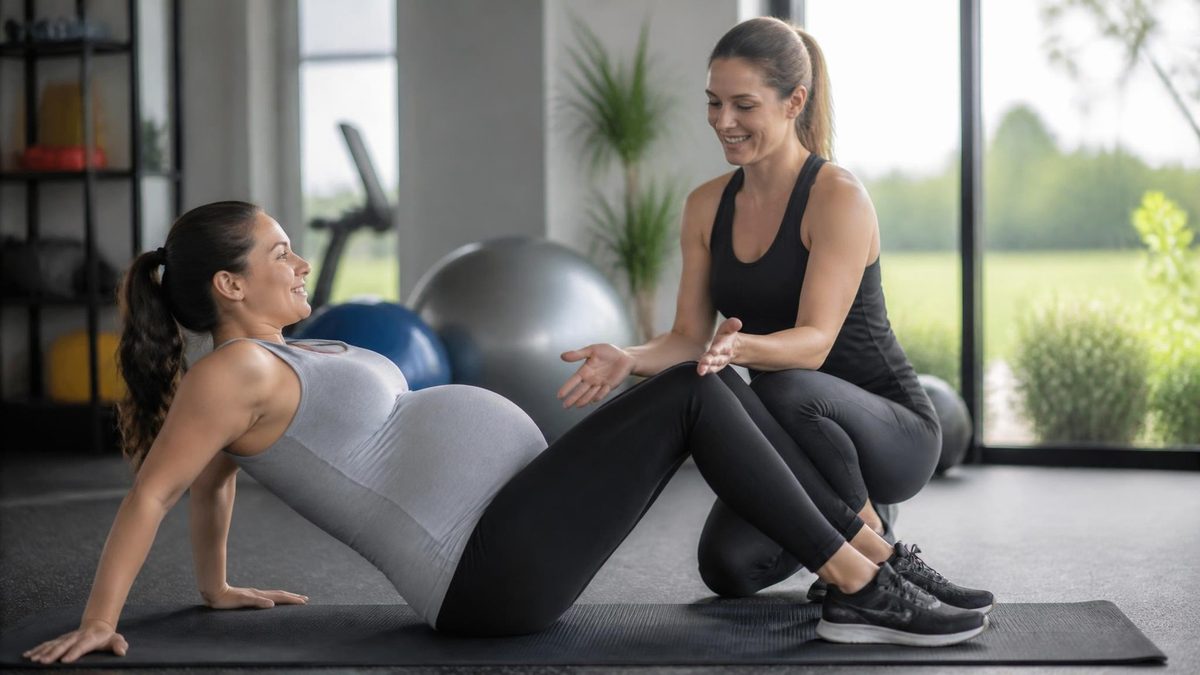
Adapt your training through pregnancy and after birth instead of stopping it without a clear reason. A suitable personal trainer can change each exercise, load, range of motion and rest period as your body changes. Your maternity care team should guide decisions when you have health risks, pain or unusual symptoms.
After birth, start from your current ability rather than trying to return at the level you reached before pregnancy. Recovery differs between women and between births. A useful plan respects healing, sleep, feeding demands, pelvic health and the type of delivery you had.
What should pregnancy personal training help you do?
Pregnancy training should help you keep useful strength without treating each session as a test. The aim is to support daily movement, prepare for rising physical demands and maintain confidence how your body changes.
Exercise during pregnancy and the postpartum period benefits most women and usually carries little risk, though routines may need to change as pregnancy develops. Resistance training has also been studied across maternal, birth, fetal and pelvic-floor outcomes, both alone and as part of wider exercise programs.
That evidence supports an adaptable approach. It does not prove that one routine, exercise or weight suits every mum. Your health history, current pregnancy and response during each session still matter.
A good session may include a squat pattern for getting up from a chair, a supported pulling exercise and a safe way to lift from the floor. These movements can relate to tasks such as carrying shopping, getting out of bed and lifting a baby capsule. The trainer should keep the effort controlled and check how you feel during the work.
Why does the program need to change as pregnancy develops?
Prenatal development changes the space, pressure and energy demands within your body. Your growing abdomen shifts how you stand and move. Exercises that felt natural early in pregnancy may become awkward later, even when your fitness remains good.
The answer is usually a change in setup. A trainer may raise the starting height of a deadlift, use a box for squats or add support during split-stance work. They may shorten a movement if control drops. They may also reduce the load while keeping the same movement pattern.
Intensity needs attention too. A hard session should never become a contest with your pre-pregnancy numbers. Your trainer can use your breathing, technique and reported effort to guide the session. You should be able to speak up as soon as a movement feels wrong.
Heat also matters on the Gold Coast, Queensland. An outdoor session that felt comfortable before pregnancy may feel much harder on a hot or humid morning. Moving indoors, training earlier and taking longer breaks are sensible changes. Feeling faint or unwell is a reason to stop, not a cue to push through.
How should your pelvic floor affect exercise choices?
The Pelvic floor helps support the organs within the pelvis and responds to pressure from breathing, lifting and impact. Pregnancy and birth can alter how well it manages that pressure. Symptoms during exercise give useful information about whether the task suits your current capacity.
Urinary incontinence during a jump, cough or lift should not be dismissed as a normal price of motherhood. Heaviness, dragging or a bulging feeling can also need assessment. These may be linked with Pelvic organ prolapse, though symptoms alone cannot confirm the cause.
A Kegel exercise is a deliberate pelvic-floor contraction. It can be useful when it matches the person and is performed well. Yet more squeezing is not a complete plan. Some women need help learning to relax the muscles, coordinate them with breathing or manage pressure during lifting.
Personal training should stay within the trainer's professional limits. Persistent leaking, pelvic pain or heaviness calls for assessment by an appropriate health professional. Physical therapy focused on pelvic health can help identify what is happening and guide the trainer on suitable limits.
What should you know about abdominal separation?
Diastasis recti describes a change in the tissue between the two sides of the abdominal muscles. A visible ridge or gap does not tell you by itself how strong or capable your trunk is. The way the Abdominal wall manages load matters more than chasing a perfect-looking gap.
Your trainer should watch how you breathe and control pressure during an exercise. If your abdomen pushes outward sharply, the movement may need a smaller range, less resistance or more support. That does not mean you must avoid all abdominal training.
Early options may include breathing with gentle trunk tension, controlled limb movements and supported strength exercises. Progress should depend on function. Can you move without pain? Can you breathe through the effort? Can you keep control as the load rises? Those questions are more useful than judging recovery from appearance alone.
Diastasis recti can exist with other concerns, including pelvic-floor symptoms or back discomfort. A trainer cannot diagnose their cause. Ask for a health assessment when symptoms persist, worsen or limit daily life.
When should you pause training and seek medical advice?
Stop the session if you develop warning Signs and symptoms such as vaginal bleeding, fluid loss, chest pain, faintness or severe shortness of breath. A painful contraction pattern, strong pelvic pressure or a sudden change in your baby's usual movement also needs prompt maternity advice.
This list cannot cover every medical situation. Contact your maternity service when a new symptom feels severe, unusual or worrying. Seek urgent help when symptoms suggest an emergency.
Your obstetrician, midwife or General practitioner may place limits on exercise because of your health or the course of your pregnancy. Give those instructions to your trainer. A responsible trainer will work inside them and refer questions back to the clinician.
Normal effort can still feel challenging. Muscles may tire and breathing may rise during strength work. The key difference is whether the feeling settles with rest and matches the planned task. Sharp pain, loss of control or feeling unwell is not useful training stress.
How soon can you train after giving birth?
There is no single restart date that suits every birth. The first stage is recovery and gentle movement that feels comfortable. Formal strength work should begin when your medical guidance, symptoms and basic function support it.
A vaginal birth may involve tearing, stitches or pelvic-floor symptoms. A Caesarean section also involves abdominal surgery and wound healing. Neither route should be ranked as easy or hard. Each creates different needs, and complications can change the timeline.
Early sessions may focus on breathing, comfortable walking and simple movement from a chair. The aim is to learn what your body can handle now. Load can rise later when the work causes no concerning pain, wound issue, pelvic heaviness or symptom flare.
Postnatal recovery is rarely a smooth weekly climb. Sleep loss, feeding demands and illness can lower your capacity for a few days. A lighter session during a hard week protects consistency. It does not erase progress.
How should postnatal strength be rebuilt?
Rebuild from control to resistance, then add speed or impact if those qualities serve your goals. You do not need to prove that you are ready by completing a punishing workout.
Begin with movements tied to daily life. A supported squat can prepare you for standing while holding your baby. Rows can build strength for feeding and carrying positions. A raised deadlift can teach you to pick up a pram part while keeping the load close.
Increase one demand at a time. Add a small amount of weight while keeping the same range, or extend the range while holding the load steady. If you change everything in one session, it becomes hard to tell what caused a symptom.
Watch the next day as well as the session itself. A plan may need adjustment if exercise brings lasting pain, heavier bleeding after activity or a rise in pelvic symptoms. Report those changes instead of hiding them to keep up with a schedule.
What does a well-run personal training session look like?
The trainer should ask about your stage of pregnancy or time since birth, current medical advice and how you feel that day. They should also know about your previous training without assuming that your old ability sets today's target.
The warm-up should prepare you for the planned movements. The main strength work should use stable positions and loads you can control. Rest should reflect your current energy rather than a fixed timer.
Clear coaching matters. The trainer should explain why an exercise was chosen and what would make them change it. They should offer another option when a position causes pain, pressure or discomfort.
Privacy matters too. Pelvic symptoms, birth experiences and body changes can be hard to discuss. You should be able to report them without shame. A trainer does not need intimate detail beyond what affects safe exercise, and they should refer clinical concerns instead of trying to treat them.
How can you tell whether a trainer is suitable?
Ask about their education in pregnancy and postnatal exercise. A general fitness qualification does not prove skill with birth recovery, pelvic symptoms or pregnancy modifications. Look for clear answers about how they assess readiness and when they refer a client. a suitable trainer
Ask what happens if your medical advice changes. The trainer should be willing to adjust the plan and communicate within your care team's guidance. Be cautious if someone promises to fix Diastasis recti, treats leaking as harmless or guarantees a rapid return to your former body.
A suitable trainer should care about function and symptom response. They should never use shame about weight or appearance to drive effort. Your goals may include strength, energy or a return to sport. The plan should connect each exercise to those goals.
What should you do before your first session?
Prepare a short record of your current stage, birth details if relevant and any exercise limits from your care team. Note symptoms that appear during walking, lifting, coughing or previous workouts. Include medicines or health conditions that your trainer needs to know about.
Then use this starting process:
- Ask your maternity clinician whether any current risk or symptom changes what you may do.
- Choose a trainer with pregnancy and postnatal training education.
- Set a functional goal, such as lifting your baby without pain or returning to a chosen activity.
- Agree on the Signs and symptoms that will stop or change a session.
- Review your response after each session and again the next day.
Do not judge the first workout by how sore it makes you. Judge it by whether the dose suited your body and gave the trainer useful information for the next step.
What is the one step to take now?
Book a pregnancy- or postnatal-specific assessment, share your current medical guidance and begin with a session matched to what your body can do today.
Sources
- Prevett C, Gingerich J, Sivak A, Davenport MH (2025) "Resistance training in pregnancy: systematic review and meta-analysis of pregnancy, delivery, fetal and pelvic floor outcomes and call to action" British journal of sports medicine. PMID: 40610191
- (2020) "Physical Activity and Exercise During Pregnancy and the Postpartum Period" Obstetrics & Gynecology. DOI: 10.1097/aog.0000000000003772